
 The Scope of the Problem
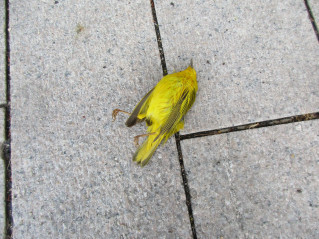
Birds are dying because they cannot see windows. Whether windows are clear, see-through, or reflective, birds hit these glass “barriers” with regular frequency. Bird mortality due to window collisions is high. Every year in the United States, 100 million to 1 billion bird-window collisions occur with the number of hits being more frequent during spring and fall migrations.
Bird-window collisions are the greatest human cause of bird mortality world-wide. It is more deadly to birds than power lines, pollution and pesticides, vehicles, cell towers and wind turbines. Only habitat loss and cats are more lethal.
Research has shown, it is the day-to-day collisions that occur year-round at residential and low-rise commercial buildings that account for most bird-window collisions.
Hundreds of x-rays have shown that birds do not break their necks when they collide with glass but that they suffer concussions and internal injuries. These injuries can take days to kill and victims fly away, to die elsewhere, out of sight and out of mind.
Personal Stories
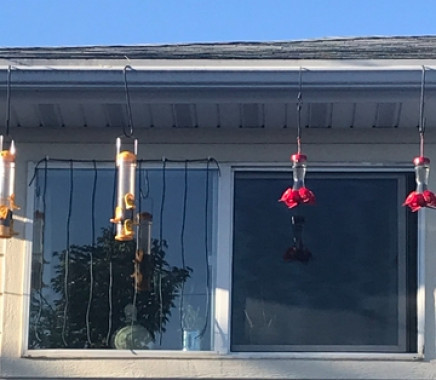 Paul Vincent Bernard installed the Acopian Curtain on his 2nd floor windows.
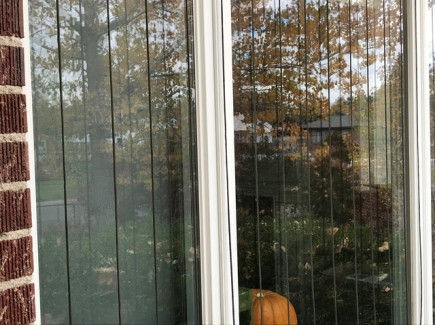 Cory and Jessica Stokes installed the Acopian Curtain on their windows years ago. They caution that over time curtain will shrink in length due to getting wet. They recommend planning for this shrinkage by cutting the cords longer than is initially needed.
Jordan River Nature Center is Bird Friendly
The Tracy Aviary has a second campus along the Jordan River in South Salt Lake at 3300 South and 1100 West. The center’s building has lovely picture windows and a sliding glass door that looks south along the river. Unfortunately, these windows have experienced bird strikes. A nearby birdfeeder station and water feature offers visitors the opportunity to study the birds at close range from the center’s front porch. When feeders are located close to windows there can be an increased risk for bird-window collisions. What to do!?
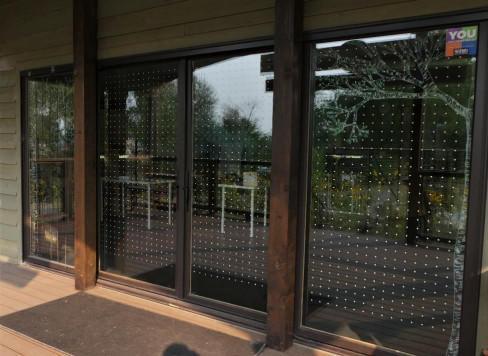
Anne Terry, Director of the Jordan River Nature Center mitigated these windows to make them visible to birds and decrease the number of bird-window collisions. Anne used Feather Friendly® bird tape for this effort. Bird tape is applied on the outside surface of the windows creating an effective “frit” pattern. The tape is adhesive and wears well over 4+ years. The Feather Friendly® bird tape meets the standards set by the American Bird Conservancy for prevention of bird-window strikes. Products that bear the ABC Saves Birds tested logo have met the criteria established by ABC for making windows more visible to birds.

Stop by the Jordan River Nature Center to see this example of Feather Friendly bird tape in action.
Stephanie Weems explains how she mitigated her windows
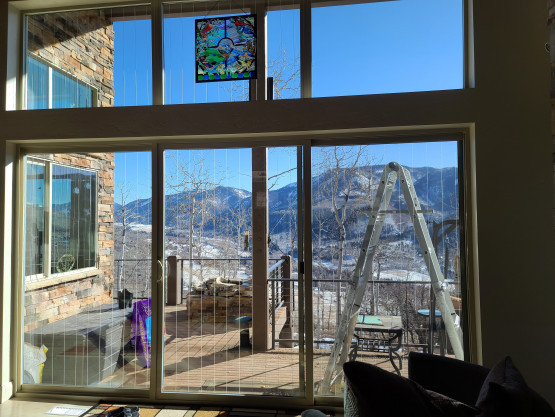
Stephanie uses penned lines on her large picture windows to make her windows visible to birds. She has seen a significant reduction in bird-strikes since using this mitigation effort.
Supplies:
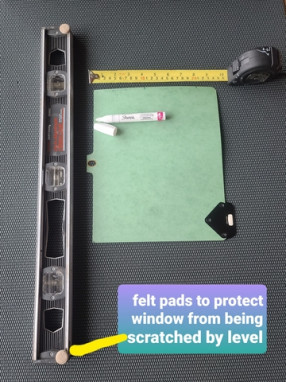
- Tape measure
- At least 2' level
- Ruler
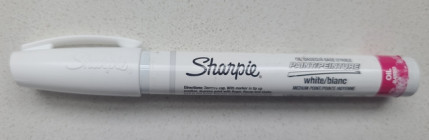
- medium oil-based Sharpie pen
- Wet rag and fresh razorblade
- Dry rag
Preparation:
Since these lines will be painted on the outside of the window, it's easier to start with clean windows. These pens work better when it's at least 60 degrees outside.
Steps:
- Use the measuring tape to determine center of the window by measuring the horizontal width of the glass and dividing that measurement by 2.
- Make a small mark with the pen on the glass at the base of the window at the center point of the window.
- Using the ruler, starting at the center mark from the previous step, mark a point every 4 inches until the entire horizontal width of the window is marked every 4 inches.
- Position the level vertically at one of the marks from the previous step.
- After making sure the bubble in the level is centered, use the pen to draw the line from the mark as far as the level will allow.
- Reposition the level using that same line as a guide and continue extending the line until the line extends from the top to the bottom of the window vertically.
- Repeat previous step for each 4" mark on the window.
Mistakes are easy to erase and correct using a wet rag and a straight edge utility razor blade. To remove a section of line, wet the glass thoroughly and then use the razorblade at about a 35-degree angle to scrape the line off the glass. The glass must be wet or the razor blade can scratch. Then dry the surface thoroughly and re-pen the line.